We provide security camera sales, design, installation, move, add, change, and troubleshooting services in Austin and surrounding areas. We do not care whether you purchased the camera from us, purchased it online, or acquired the system/camera elsewhere. We are on a mission: To help keep Austin safe, one camera at a time. We service homes and businesses of all sizes. Call us now! 512.257.1433
Business Communication Solutions offers sales and design services of security camera for home and business. Our consultation and estimate services are free. You can call us now for free estimates.
Selecting the best camera system might be difficult due to the multitude of options available. Let us help you make the process easier.
The world of security camera systems has undergone a remarkable transformation in the past two decades. Cameras have become more affordable, and the range of options can be staggering. We stay at the forefront of these advancements to provide you with the best solutions.
Security Camera has become more affordable in the last decades. However, the installation and labor cost can still be expensive. We have far seen too many customers went wifi then later have regrets due to common problems associated with wifi:
Are you in the same situation? We aim to make security cameras more affordable for homes and small businesses by offering affordable installation prices. Please call us now if you have a free consultation/estimate. 512.257.1433


Consider the following: “What and where do you want to secure your assets and property—indoors or outdoors? —as well as the power supply, video storage, IP or analog camera type, resolution, frame rate model, indoor and outdoor illumination, and audio system.
IP rated as dust tight and protected against water projected from a light pressure of water such as nozzle.
Resists high-pressure, multidirectional water jets and can resist water jets fired from a 0.50-inch nozzle.
Prevents submersion in water in the range of 5.9 to 39.37 inches and prohibits the entry of hazardous water.
Offers protection against dust and continuous submersion in water, withstanding submersion for up to 30 minutes and at least one meter.
Cloud-based systems use an internet connection to record and save video in cloud storage. In addition to offering an additional degree of protection by enabling off-site backup of your private and crucial information, IP camera cloud storage also lets you access them from any location at any time.
Surveillance lens motion detection videos are saved locally to a Micro SD card by SD card recorders. Thus, local or onsite storage is another term for this kind of video capture. Though some security cameras may come with a built-in micro-SD card, in other situations, you’re expected to make a separate purchase on your own (for cameras with SD card slot).
NVR security systems uses modern technologies, such PoE connections or wi-fi internet, are used by NVR security systems to simplify and expand the capabilities of video monitoring. IP cameras are connected to NVR security systems, which then use the cameras’ combined video collection and processing capabilities to relay the encoded (digitized) footage to the NVR over the internet.
Coaxial cables, which are commonly used with analog security cameras (sometimes referred to as CCTV cameras), are used by DVR systems. The recorder receives analog signals from analog cameras and processes the video data.
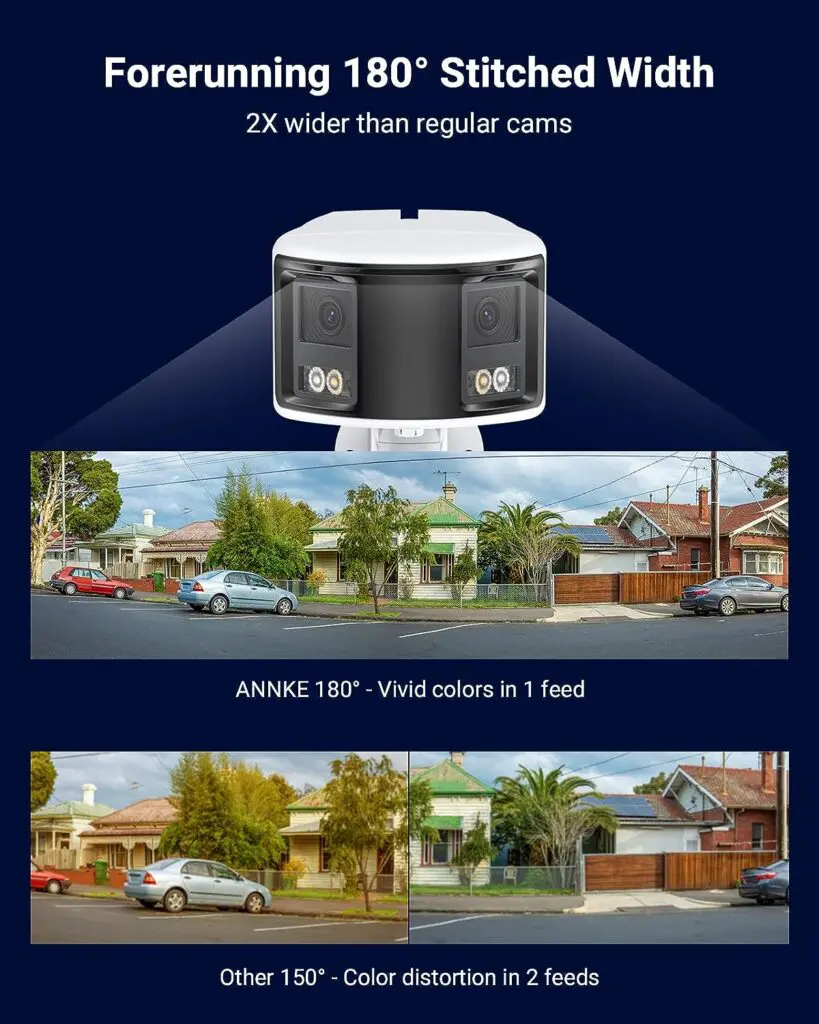
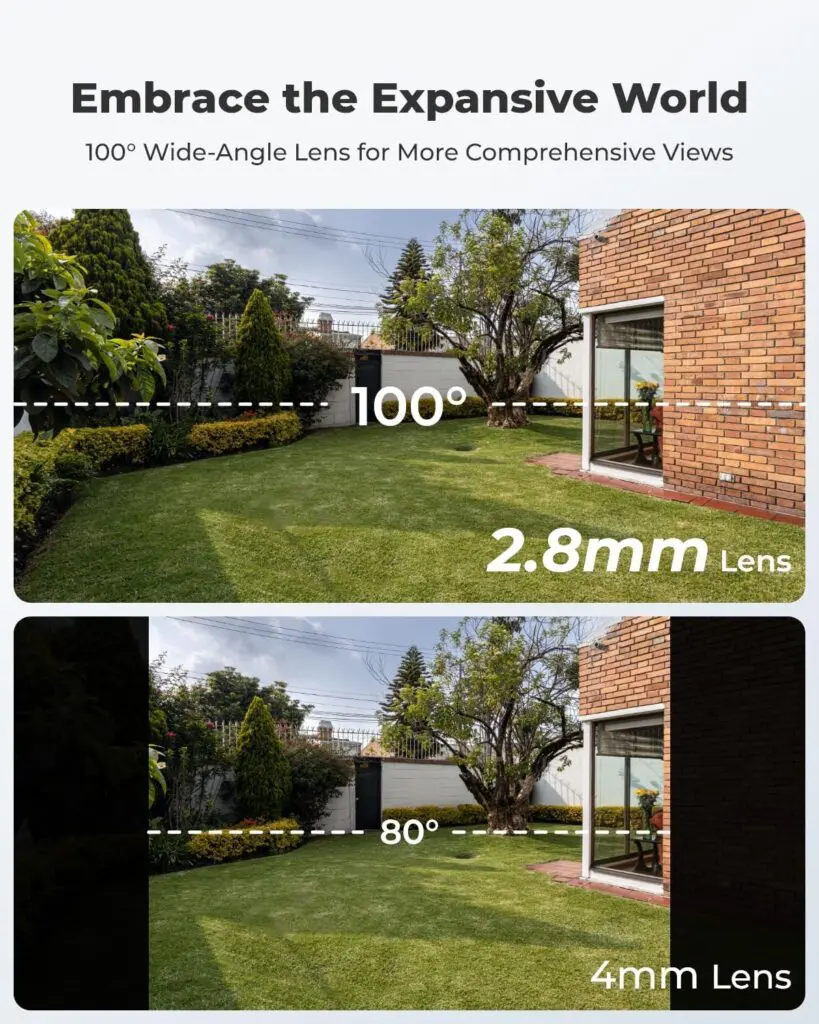
With a range typically between 60 and 110 degrees (or more), a wide-angle FOV sacrifices some coverage for better detail. It’s ideal for security cameras in that sense. At most, you’ll only be able to catch a third of the scene, but when objects and people go closer to the camera, you’ll get considerably more clarity and detail. When it comes to security, a conventional angle might work pretty well in a small space or if you’re simply looking to record a certain area of the action.
The field of vision and zoom level of a security camera are determined by the size of its lens. By far the most common lens choices are 2.8mm and 4mm. These provide the broadest field of vision. A wider-angle shot is produced by a shorter focal length (2.8mm), while a narrower angle photo is produced by a longer focal length (4.0mm). About a 90-degree viewing angle is provided by 2.8mm. An average viewing angle of 4mm is around 75 degrees.
ONVIF (Open Network Video Interface Forum) is an international, open industry forum dedicated to promoting the creation and application of an international, open standard for the physical IP-based security products’ interface. The ONVIF standard facilitates the cooperation of multiple IP-based physical security devices from different manufacturers by providing them with a common communication method, which facilitates the simpler integration of products from different suppliers. Customers now benefit from enhanced system flexibility and customization, a wider selection of compatible products, and affordability and futureproofing.The cons with ONVIF system will be that Certain functionalities related to advanced video analytics are not supported. No policy restrictions for devices that claim to be compatible. There are situations when the device and protocol cannot communicate.ONVIF brands we carry but not limited to are GNS, Hikvision, LTS, and many more.The practice of private security surveillance is not new. An electronic security system that is used, produced, or sold with the manufacturer’s exclusive legal authority is known as proprietary equipment. Exclusive coordination between proprietary systems and the manufacturer of the hardware, software, and system itself results in excellent compatibility and match.One drawback of proprietary systems is their limited base of service and their manufacturer-dependent upgradeability. An open platform system can be considerably less expensive to repair than a proprietary system, which is usually limited to being fixed by the business who installed it (using their replacement parts).Proprietary brands we carry but not limited to are Lorex, Swann, Reolink, and many others.

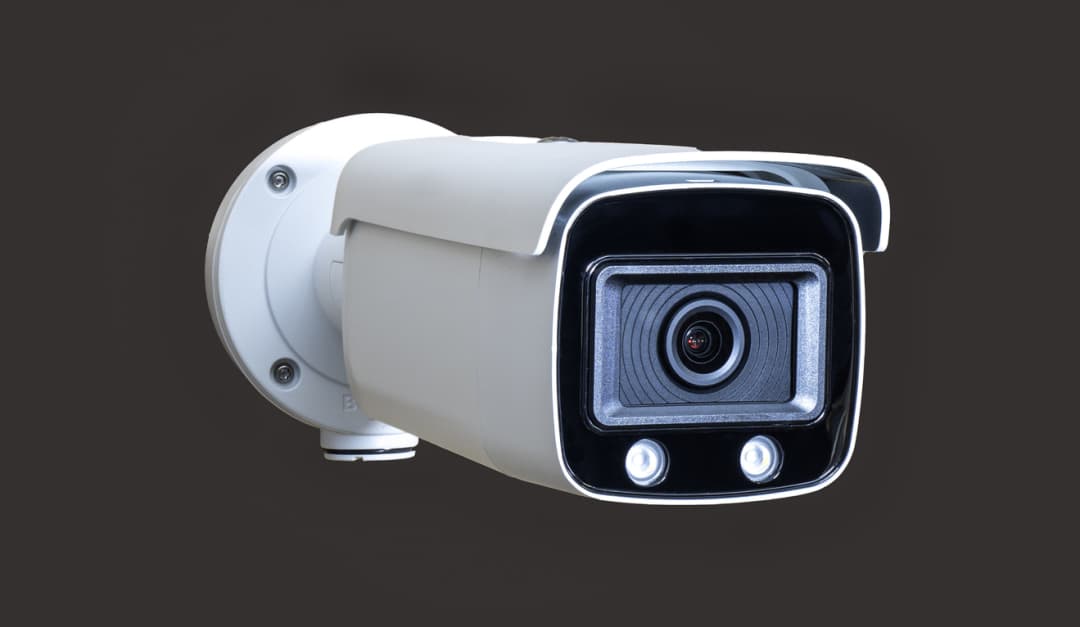
Bullet Camera– Reason for the name “bullet camera” is their unique cylindrical form, which resembles a bullet shell. The installation and range of bullet cameras is their primary advantages. Because of its extended viewing range, bullet cameras are perfect for monitoring expansive spaces like parking lots and backyards. Additionally, bullet cameras are simpler to install and allow for the mounting of larger lenses on their body because of their design. A slight lip at the tip of the bullet camera helps shield it from weather and glare, making it perfect for outdoor use. Also, a bullet camera’s powerful infrared LED allows it to capture incredibly accurate photos in a range of light settings during the day. A bullet camera is typically quite huge and noticeable, but a miniature bullet camera provides an alternative. Mini bullet cameras can be any size, small enough to be hidden inside your home or huge enough to serve as a noticeable deterrent for outside security.
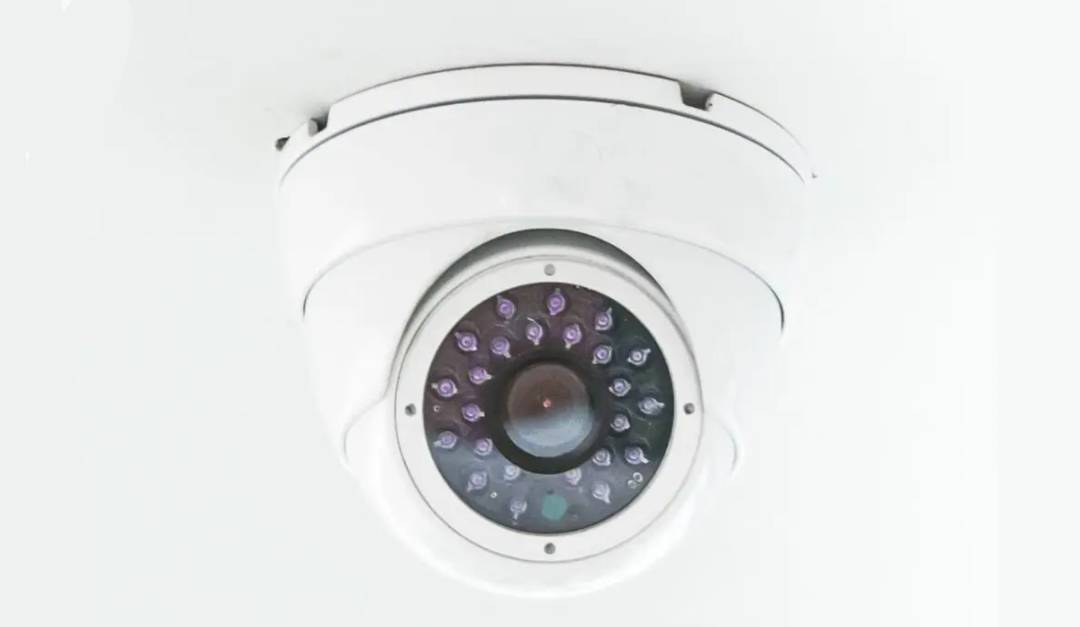
Turret Camera– Comparable to dome cameras, but without a cover. Since they are viewed as a middle ground between the dome and the bullet, they are likely one of the most widely used camera options. It has a full range of motion, though you might not be able to tell because it’s essentially a ball in a socket. The majority of turret cameras are equipped with infrared night vision, which enables the camera to record images in total darkness. Turret cameras don’t have a dome shell, so they are shielded from glare effects unlike dome cameras with glass housing. Furthermore, compared to other cameras, its distinctive construction facilitates adjustment. Turret dome cameras are frequently utilized in government installations, commercial buildings, and residential video surveillance systems.
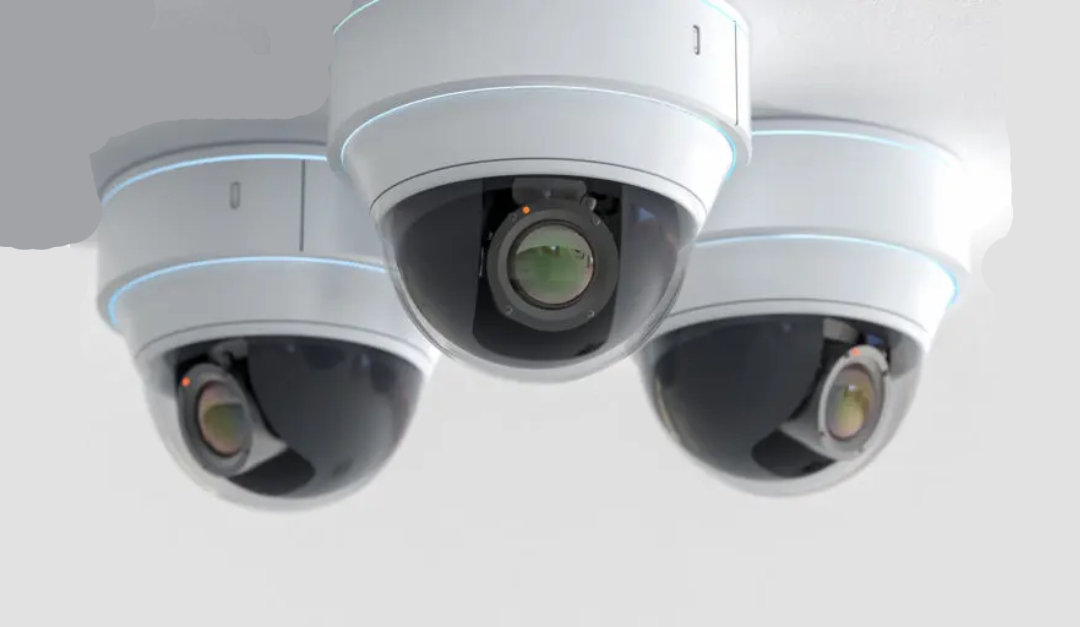
Dome Camera– The circular, dome-shaped housing of dome security cameras makes them clearly identifiable, and it allows for a great deal of versatility in focusing distance adjustment for precise positioning. Because of their exceptional coverage for almost every use scenario, dome security cameras are incredibly adaptable and may be utilized in both indoor and outdoor environments. Due to their vandal-proof dome housing, infrared (IR) LED light technology for night vision, and strong metal bases that guard against tampering or vandalism, dome security cameras are the perfect choice for dependable surveillance in challenging environments.
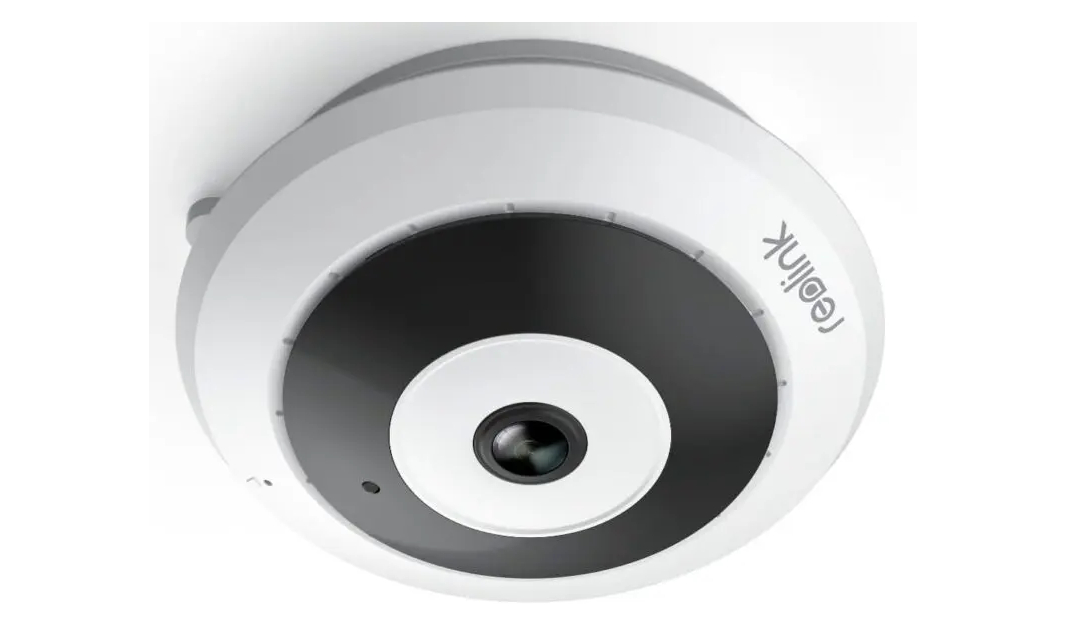
Fisheye Camera– Fisheye lenses are renowned for having an incredibly wide field of view. The broad panoramic or hemispherical image produced by a fisheye lens is named for its similarity to the distorted, round, and incredibly wide image that appears when looking through a door’s peephole. The majority of fisheye cameras provide a 360° panoramic view, allowing them to cover a very large area without any blind parts. Fisheye cameras include exceptional characteristics including night vision, HD quality, 3D noise reduction, etc. in addition to its ultra-wide-angle lens. Factory sites, hospitals, parking lots, airports, hotels, and other establishments frequently utilize fisheye cameras because of their exceptionally wide angle, vandal resistance, and discreet appearance.
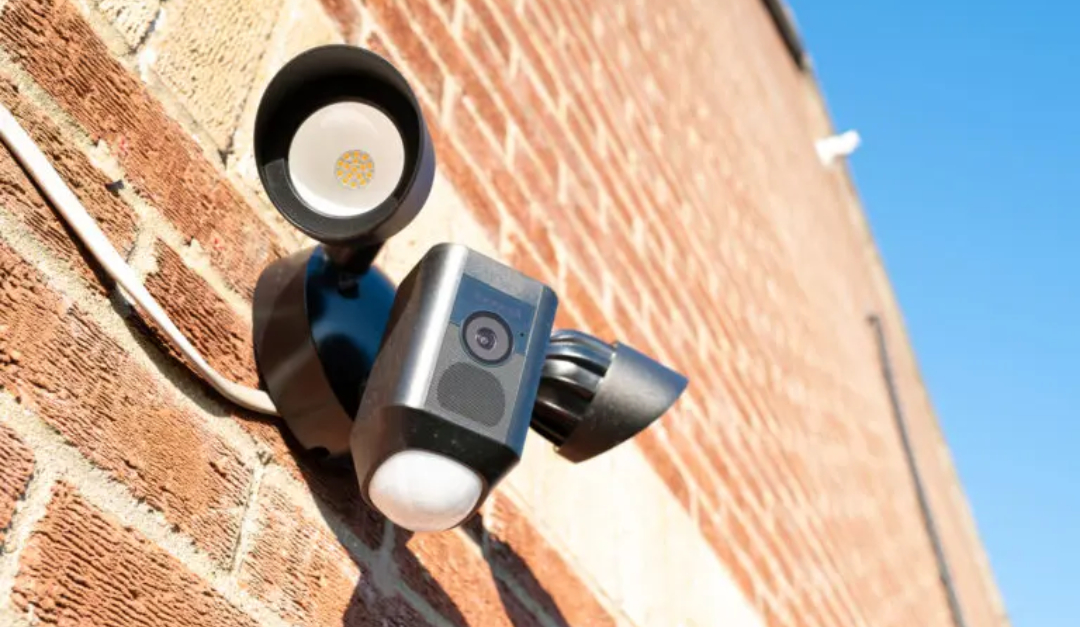
Floodlight Camera– Floodlight cameras are an excellent choice for driveways, yards, and the perimeter of your property at night because they combine the functions of a security camera and a floodlight into a single exterior fixture. Having a camera and floodlight in one unit is a great option if you’re a homeowner. Smart lighting truly does make criminals think twice, and security cameras are an excellent deterrent to crime. One of the best ways to discourage burglars is to have outdoor lights at night. Don’t take the chance of being vulnerable because of this. Floodlights are a fantastic alternative, but they do have some disadvantages. First, they may occasionally need to be hardwired, which can be expensive. Secondly, the device itself may be more expensive than other conventional security cameras.
POE Switch: Ethernet cables (cat5e, cat6, and cat6a) are the most widely used cables for security cameras. These wires use an internet connection to send video data. They can also provide power to specific kinds of cameras, referred to as “power over ethernet,” or PoE IP cameras. The maximum length on certain cameras and devices for Ethernet cable is 328 feet, or 100 meters: after that, the signal deteriorates and the connection’s speed and dependability decrease. We carry a PoE Switch by LTS LTPOE-SW1603C that is a helpful tool for cable runs extending 328′ and up to 800′ providing consistent connection. If you need a camera install that extends over 328′ give us a call at 512.257.1433 for a free survey to design a security surveillance to your specific needs.
A POE Switch is a type of network switch that can supply devices such as wireless access points and IP cameras with power over Ethernet. This approach eliminates the need for separate power sources for every device by enabling the transfer of both data and power over the same Ethernet wire. Significant saving on cost is possible with POE switches. POE switches eliminate the need for individual power supplies and wiring for every device, which will save on installation expenses and energy cost. POE switches reduce cable clutter considerably by using a single connection for both data and power. This can help your network configuration become more simplified and well-organized, which allows for easier management and troubleshooting.
Wide Dynamic Range technology enhances the image quality of cameras in high-contrast lighting situations, where both dim and bright areas exist within the field of view. A camera with robust WDR (Wide Dynamic Range) performance can capture details clearly by correctly exposing both the darkest and brightest areas of a scene. Therefore, cameras equipped with WDR technology are especially suitable for environments like building entrances, ATMs, transportation hubs, and areas adjacent to windows or similar light-intensive spots.
Description: Dome cameras are named for their dome-shaped housing and are widely used for indoor and outdoor surveillance. They are often vandal-resistant and provide a discreet surveillance option.
Typical Power Consumption: 3-8 watts
PoE Support: Yes, commonly supported.
Description: Bullet cameras have a cylindrical shape and are typically used for long-distance viewing. They are often installed in outdoor environments due to their robust housings.
Typical Power Consumption: 4-12 watts
PoE Support: Yes, commonly supported.
Description: PTZ cameras can pan, tilt, and zoom to cover larger areas and provide detailed views. They are ideal for monitoring large spaces such as parking lots and stadiums.
Typical Power Consumption: 10-30 watts
PoE Support: Yes, but often require PoE+ due to higher power needs.
Description: Turret cameras, also known as eyeball cameras, are similar to dome cameras but with a ball-and-socket design that allows for easy positioning. They are versatile for both indoor and outdoor use.
Typical Power Consumption: 3-8 watts
PoE Support: Yes, commonly supported.
Description: Fisheye cameras provide a 360-degree panoramic view, making them suitable for monitoring large areas with a single camera. They are often used in retail and commercial spaces.
Typical Power Consumption: 4-10 watts
PoE Support: Yes, commonly supported.
Description: Box cameras are versatile and can be used with different lenses to suit various surveillance needs. They are often used in environments requiring detailed and high-resolution images.
Typical Power Consumption: 5-15 watts
PoE Support: Yes, commonly supported.
Description: Thermal cameras detect heat and are used in environments where standard cameras might be ineffective, such as in complete darkness or through smoke. They are used in industrial and security applications.
Typical Power Consumption: 6-20 watts
PoE Support: Yes, but may require PoE+ due to higher power needs.
Description: Wireless cameras use Wi-Fi for data transmission and are ideal for areas where cabling is difficult. They require power through an adapter or battery.
Typical Power Consumption: 3-10 watts (if using an adapter)
PoE Support: No, requires separate power source.
Description: 4K cameras provide ultra-high-definition video, offering greater detail and clarity. They are used in environments where high-resolution footage is critical.
Typical Power Consumption: 8-15 watts
PoE Support: Yes, often require PoE+ due to higher power needs.
At Business Communication Solutions, we provide expert advice on selecting the right cameras for your needs and ensure they are powered efficiently using the latest PoE technology. This guarantees optimal performance, reliability, and energy efficiency for your surveillance systems.
Brands that we sell and install includes but not limited to Swann, Reolink, Lorex, Alibi, LTS, GNS, Unifi and many more. Click on brands below for our promotional deals we have right now or call 512.257.1433
The primary and vital difference between indoor and outdoor cameras is weatherproofing (weather resistance). Indoor cameras for residential or commercial operating temperatures are usually not high. As for outdoor cameras, Mother Nature plays a huge factor—burning sun, hard rain, or heavy snow—so they must be built sturdier.
Indoor security cameras include nanny, pet, and home security cameras that are usually not weatherproof.
Pros: good video quality, low cost, small and easy to conceal or hide, may reduce insurance costs, easier installation, remote access
Cons: Less durable; improper installation can be hacked.
Outdoor security cameras include a video doorbell, floodlight, solar-powered, and weatherproof home security cameras.
Pro: Weatherproof, deter property crime, may reduce insurance costs, property monitoring, most are tamperproof, good night vision performance,
Con: Large and heavy, more expensive than indoor, professional installation
A wired camera receives power from a residential or commercial electrical system instead of a battery or solar charger.
Pros: No battery replacement or recharging, stable power and internet connection, higher-quality videos
Cons: An electrician is required for installation; it may be burdensome to remove if you relocate; placement limitations
Pros: Easy to install, relocate, user-friendly, and works anywhere
Cons: Monthly fee cloud storage, WIFI connection can be unstable, manual battery charging or replacement
Difference: A DVR converts analog footage into a digital format, while an NVR typically only works with digital footage. DVR systems process data at the recorder, while NVR systems encode and process data at the camera before transmitting it to the system for storage and remote viewing.
DVR (Digital Video Recorder): how it works—aka CCTV cameras, analog cameras produce a raw video signal. There are fewer features than IP cameras, and usually, the video quality is not as high, although there have been advances to offer improved analog resolution. Overall, their lower specs make them more affordable than IP cameras. Since all the DVR recording is in, it is possible to transmit the raw video signals of many different camera models on one system. DVR is an excellent option for sites with cameras of varying brands and models. The coaxial cable carries the raw video signal from the camera to the DVR for image processing. It does not power the cameras, but options are available with an integrated power splitter to carry out both functions on one cable.
NVR (Network Video Recorder): how it works: uses newer technologies, such as internet connectivity, to make video surveillance more accessible and flexible. NVR security systems connect to IP cameras, which capture and process video simultaneously, sending the encoded (digitized) video to the NVR via an internet connection. IP cameras can connect to NVRs in two ways: a PoE (Power over Ethernet) connection or a wireless/WIFI connection.
We get this request often. Of course. We offer security camera system installation, repair, and troubleshooting services. Whether you want to add one camera, troubleshoot one camera, or troubleshoot some cables or connectors, we can help. Call us now to book your appointment. 512.257.1433